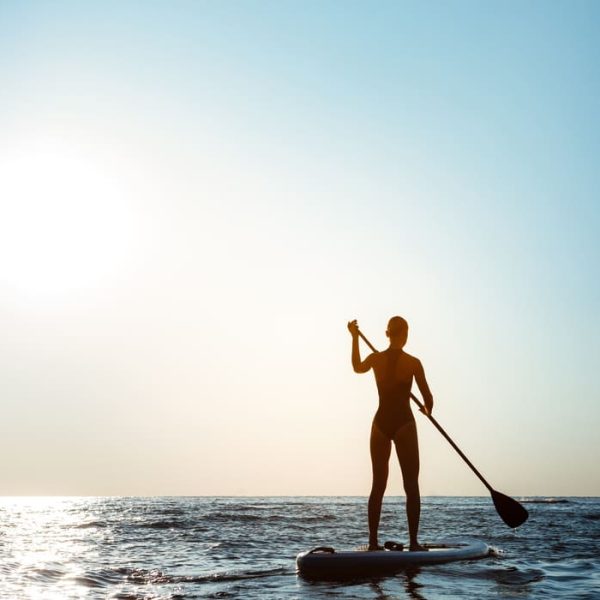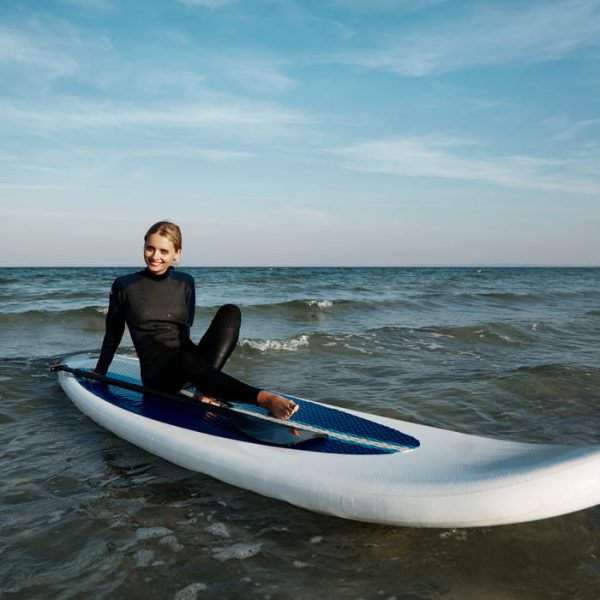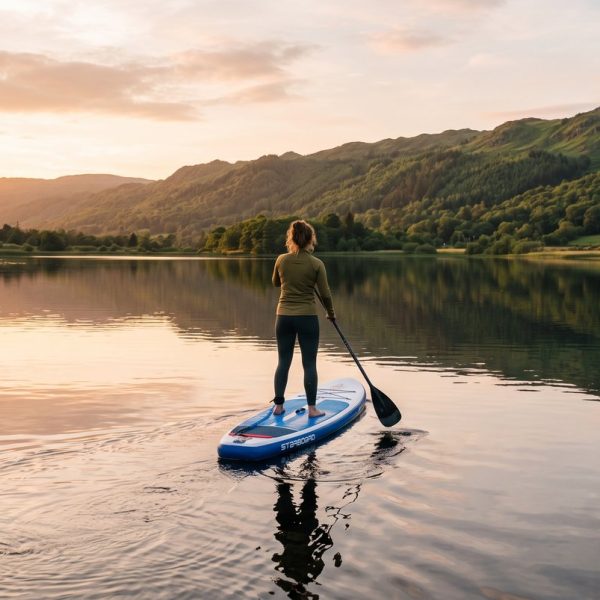
Walk down to almost any calm stretch of water on a summer morning and you will see them: people gliding along on wide, floating boards, paddle in hand, looking far more relaxed than the effort suggests. Stand up paddleboarding has gone from niche to everywhere in barely a decade, and for most newcomers the first real decision is which board to buy. An inflatable paddle board is where the vast majority now start, and for good reason. It packs down into a bag, shrugs off being dropped on rocks, and costs a fraction of what a hard board used to. The trick is knowing which features matter and which are just marketing.
Why an inflatable paddle board makes sense for beginners
The old assumption was that inflatable meant flimsy. Modern drop stitch construction changed that. Thousands of internal threads hold the top and bottom skins together, so once the board is pumped to the right pressure it becomes genuinely rigid, stiff enough to stand and even walk on. For anyone without a garage or a roof rack, the appeal is obvious. A hard board needs storage space and a way to transport it, while an inflatable rolls into a backpack you can carry onto a train or check as luggage. That portability is the single biggest reason the category exploded.
The specs that actually matter
Length, width and thickness decide how a board behaves. Wider boards, around 32 to 34 inches, feel stable and forgiving, which is exactly what a first timer wants. Length affects glide, and a board around 10 to 11 feet is a sensible all rounder. Thickness, usually six inches, keeps you riding high rather than sinking. Pay attention to the recommended weight range too, because a board loaded beyond it sits low and turns sluggish. The best inflatable paddle board for you is not the one with the longest spec sheet, it is the one matched to your size and the water you will actually use.
Do not ignore the pump and the paddle
Two accessories quietly make or break the experience. The first is the pump. A manual double action pump is fine, but inflating to 15 psi by hand on a hot day is a workout in itself, which is why many people eventually buy an electric pump. The second is the paddle. Cheap aluminium paddles are heavy and tend to flex, while an adjustable fibreglass or carbon paddle costs a little more and saves your shoulders on longer outings. A decent leash and a buoyancy aid round out the kit, and neither is optional once you are past the shallows.
An inflatable board only earns its keep if there is water within a reasonable drive, which quietly rules out a great many addresses. Proximity to a lake or a river is one of those lifestyle factors that rarely appears in a relocation spreadsheet but shapes how often you actually get out. It is worth checking against the best small towns in america, many of which sit on genuinely good water.
How to paddle board without the early wobbles
Learning how to paddle board is easier than it looks, and the common mistakes are predictable. Start on your knees in flat, sheltered water to get a feel for the balance point, which sits roughly over the carry handle in the middle. When you stand, keep your feet parallel and hip width apart, eyes on the horizon rather than on your feet, and knees soft. Hold the paddle with the blade angled forward, not back, a detail almost every beginner gets wrong at first. Fall flat and away from the board rather than onto it, and the whole thing becomes low stakes fun very quickly.
Where to take it once you can stand
Sheltered water is the place to build confidence: a quiet lake, a slow river, or a bay on a windless morning. Coastlines with gentle, protected inlets are ideal, and if you are chasing scenery, the best beaches in Wales are full of sheltered coves that suit a beginner perfectly. Wherever you go, check the wind forecast before the water, because an offshore breeze can push you out faster than you can paddle back. Communities like the r/SUP forum are full of local spot recommendations and honest gear talk if you want a second opinion.
A little care makes a board last
Inflatables reward basic maintenance. Rinse off salt and sand after every session, let the board dry fully before rolling it away, and store it somewhere cool rather than baking in a hot car, where heat can stress the seams. Deflate it a touch for long term storage so the material is not held under constant tension. Treated this way, a good board easily lasts many seasons.
Buying smart in a crowded market
The market is flooded and quality varies wildly. Stick with brands that publish real specs and back their boards with a warranty, and be wary of the cheapest listings, which often cut corners on materials and pumps. It is worth remembering that many of the strongest paddle brands are international operations, and research shows customers are far more likely to buy in their own language, so a brand with a properly localized site and manual is usually one that takes its customers seriously. For the wider history and technique background, the standup paddleboarding overview is a solid place to read more. Buy the board that fits your life, learn the basics on calm water, and the rest tends to take care of itself.