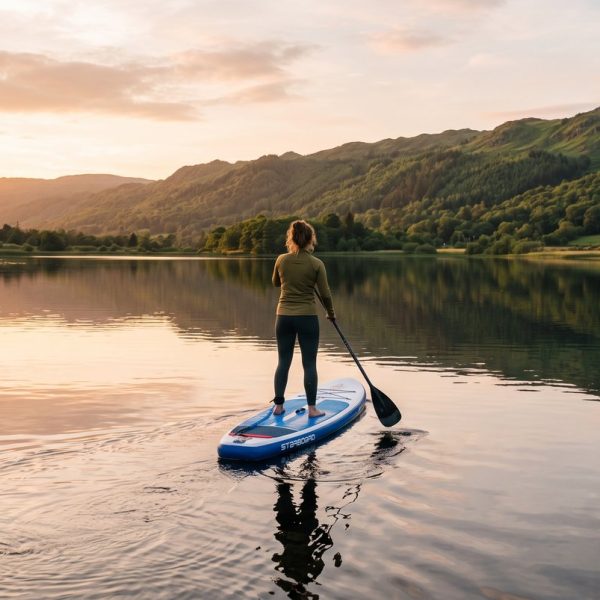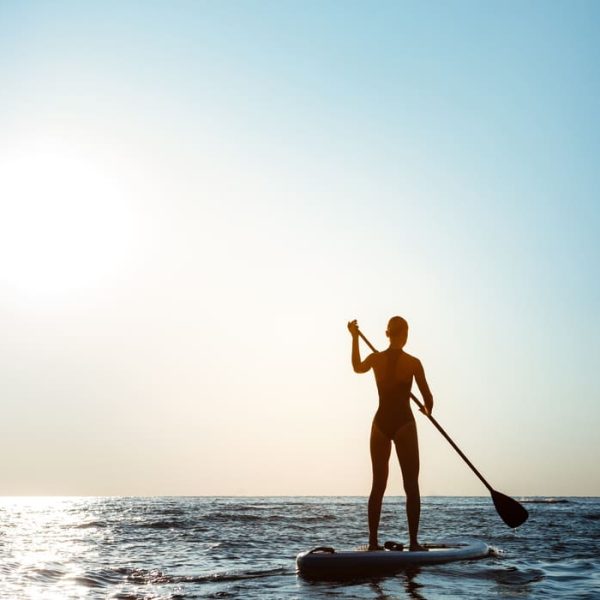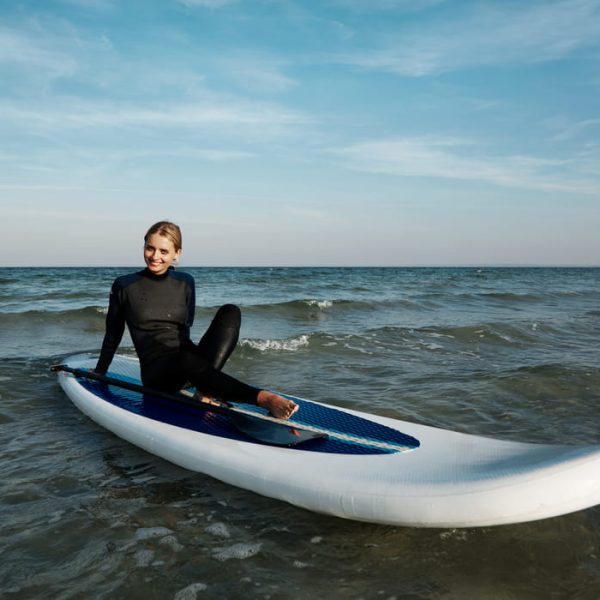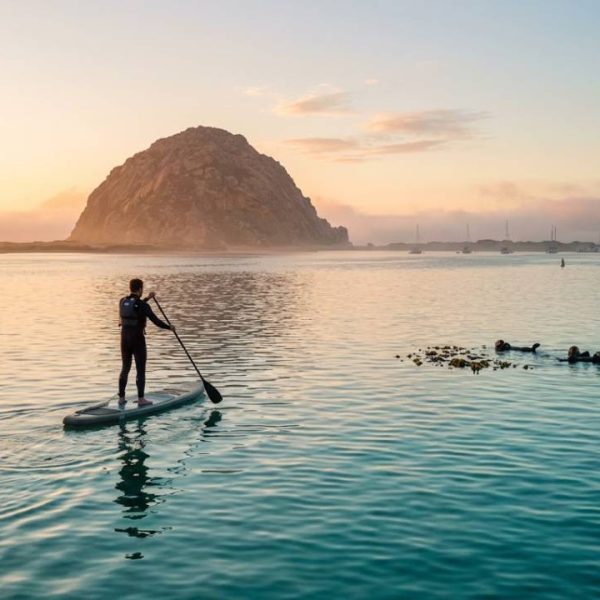
There is a special kind of quiet on flat water at sunrise. The bay is still, a seal surfaces nearby, and you glide along on a board that feels almost like walking. Stand up paddleboarding, or SUP, delivers that calm to almost anyone willing to try it, and a sheltered bay is the best classroom you could ask for.
Why calm water is the right place to learn
Waves, wind and boat traffic all make balance harder. A protected bay removes most of those problems, so you can focus on the basics: where to stand, how to hold the paddle and how to turn without falling.
Calm water also lets you look around. Wildlife viewing, from otters to herons, is one of the great rewards of paddling in an estuary, and it only works when you are relaxed enough to lift your eyes from the board.
Learn where the water forgives mistakes, and your confidence grows far faster.
Choosing a board and gear
Beginners do best on a wide, stable board with some volume. A length of around ten to eleven feet suits most adults. Narrow racing boards look sleek but tip quickly, so leave them for later.
Your basic kit should include a paddle that reaches about a hand above your head, a leash that keeps the board attached to you, and a personal flotation device. In many places a flotation device is required by law, and it is smart even when it is not.
Dress for the water, not the air. A swimsuit or quick drying layers work in warm weather, while a wetsuit makes sense when the water is cold, even on a sunny day.
Standing up without drama
Start on your knees in the middle of the board, hands on either side, and get a feel for how it moves. When you are steady, bring one foot forward, then the other, with feet about hip width apart and toes pointing ahead.
Keep your knees soft, your back straight and your eyes on the horizon, not on your feet. Looking down is the most common reason beginners wobble.
If you do fall, fall away from the board, flat on your side. Then climb back on from the middle, kneel first and stand again. Falling is part of every lesson, and a calm bay makes it more fun than frightening.
Paddle technique in three moves
Hold the paddle with one hand on top and the other halfway down the shaft. The blade angles forward, away from you. Reach ahead, plant the blade fully in the water, and pull it back along the side of the board using your core rather than your arms.
Switch sides every few strokes to keep the board tracking straight. To turn, sweep the paddle in a wide arc on one side, or step slightly back on the board and pivot.
Short, relaxed sessions build skill faster than one exhausting outing. Thirty to sixty minutes is plenty for a first time on the water.
Reading the conditions before you launch
Check wind, tide and weather every time. Offshore wind can push you out faster than you can paddle back, and a falling tide can expose mud flats you did not plan on crossing.
Plan to paddle into the wind on the way out and return with it behind you. Tell someone where you are going, and carry a whistle and a phone in a waterproof pouch.
The U.S. Coast Guard boating safety resources explain required equipment, right of way and what to do in an emergency, and they are worth reading before your first outing.
Respecting wildlife and shared water
Marine mammals and nesting birds are easily stressed. Keep a respectful distance, never chase animals, and avoid paddling close to haul out spots. If an animal changes its behavior because of you, you are too close.
Share the water, too. Kayakers, fishing boats and swimmers all use the same bay. Stay alert, keep to the edges of channels and signal clearly when you change direction.
Why lessons make a difference
A good instructor shortens the learning curve dramatically. They fix small posture problems before they turn into habits, teach self rescue and point out local hazards you would never notice alone.
Lessons also take away the guesswork about gear. Many schools provide boards, paddles and flotation devices, so you can decide whether SUP is for you before buying anything.
Welcoming visitors from around the world
Coastal towns attract travelers from many countries, and not all of them speak English comfortably. Safety briefings, rental agreements and waiver forms are exactly where misunderstandings do the most harm. A visitor who cannot read the rules cannot follow them.
Operators who care about safety often invest in language translation services so that signs, waivers and lesson notes are clear to every guest. It is a small step that builds trust and prevents accidents.
The same thinking applies online. If your booking pages speak only one language, many potential customers will never reach the checkout. This overview of website translation plugins shows how small businesses can serve visitors in their own language without rebuilding a whole site.
Making it a habit
Once you can stand, paddle and turn comfortably, the options open up. You can explore sheltered coves, try a sunset session, or join a group tour that visits kelp beds and sea caves.
Fitness benefits arrive quietly. Paddling works your legs, core, back and shoulders, and the constant small balance corrections train stability. Most people leave a session relaxed and pleasantly tired.
Take your time, keep the first outings short, and choose calm water. The bay will be there tomorrow, and each trip makes the board feel a little more like home.
Calm water, the right gear and a patient start turn nervous beginners into regular paddlers.